
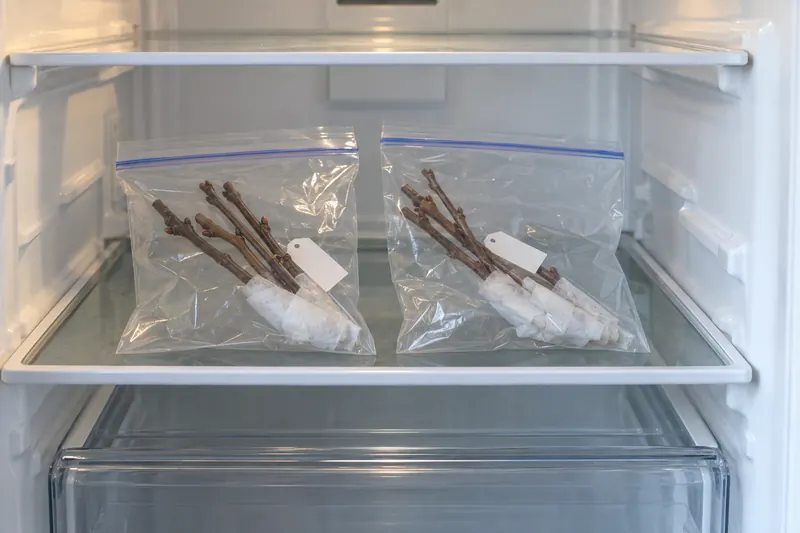
For dormant apple and pear scionwood, collect identified dormant shoots, pack each variety separately with lightly moist material, seal and label the bag, and refrigerate without freezing. Check the temperature beside the bag and keep it away from ripening fruit. The aim is to prevent drying while keeping the wood dormant—not to make a wet package.
This guide is for short seasonal storage of dormant deciduous scions before grafting. Fresh summer budwood and citrus budwood need their own handling guidance. There is no guaranteed shelf life that applies to every species.
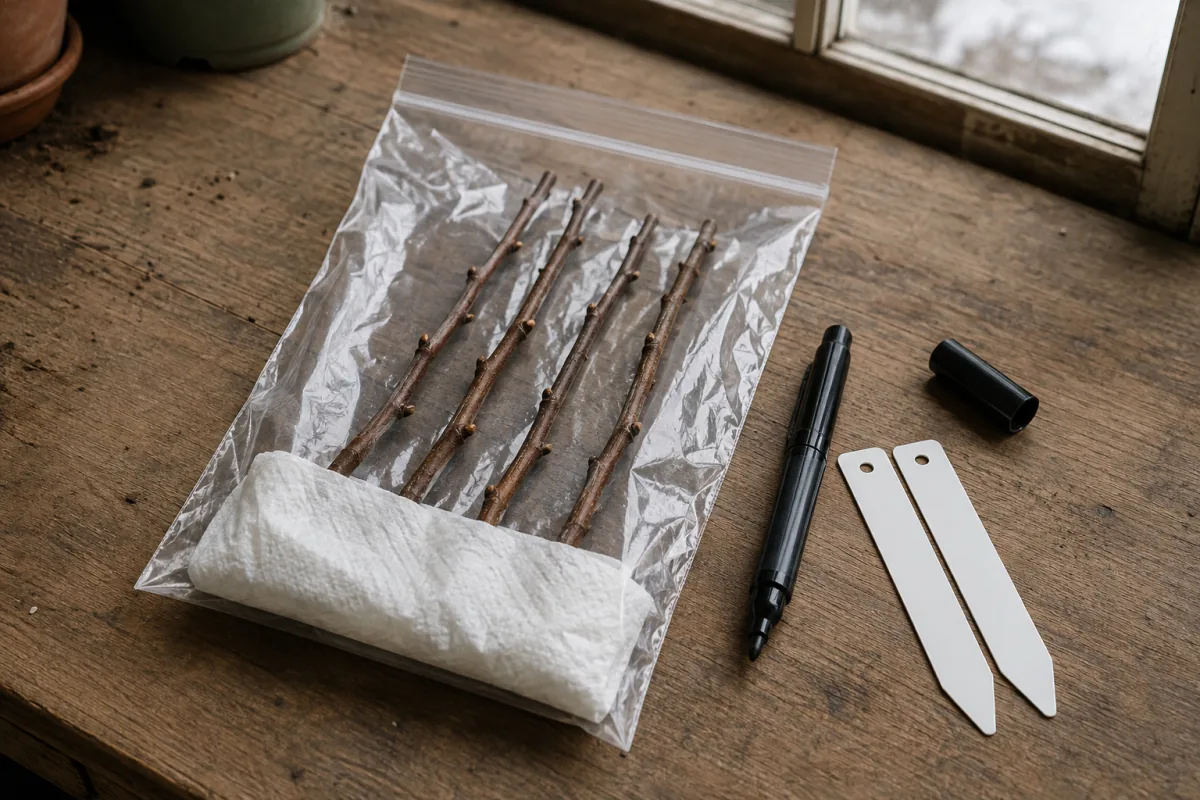
How to collect and pack scion wood
UNH Extension’s apple and pear guidance uses straight, smooth, roughly pencil-thick dormant shoots, cut into 12–18-inch storage pieces. That is a storage length, not the final length of the grafted scion. Its late-winter collection dates describe New Hampshire; elsewhere, check dormancy rather than copying the month.
- Identify the source first. Record the fruit cultivar, source tree or supplier, collection date and a batch code. Keep different varieties separate.
- Check the wood. Set aside damaged, soft, badly shrivelled or poorly identified pieces. A normal-looking shoot is not proof of pathogen-free status.
- Prepare the bag. Use a clean, sealable food-grade bag large enough to avoid bending the shoots. Add a lightly damp paper towel or the packing material specified by your chosen protocol—not a dripping wrap.
- Pack and label. Put the cultivar and date on the bag as well as a durable label with the bundle. Seal it, photograph the label and add the batch to your log.
- Refrigerate promptly. Record the bag location and actual temperature so you can reproduce the setup. Remove only the batch you need at grafting time.
UNH supports the food-grade bag and damp-towel or sphagnum approach. The duplicate label and batch photograph are our practical recordkeeping suggestions. They help prevent identity loss; they do not improve biological viability by themselves.

What temperature should scionwood be stored at?
Mississippi State Extension’s dormant-scion storage guidance specifies 34–38°F, approximately 1–3°C, with moist rather than saturated packing. Use that as a named protocol reference, not a universal survival threshold. Measure beside the package; a refrigerator dial does not show the temperature at every shelf.
Choose a stable location away from freezing vents or cooling walls. Do not assume the “coldest corner” is best. A minimum/maximum thermometer can help you notice temperature changes between inspections. Avoid repeated warming while sorting your collection.
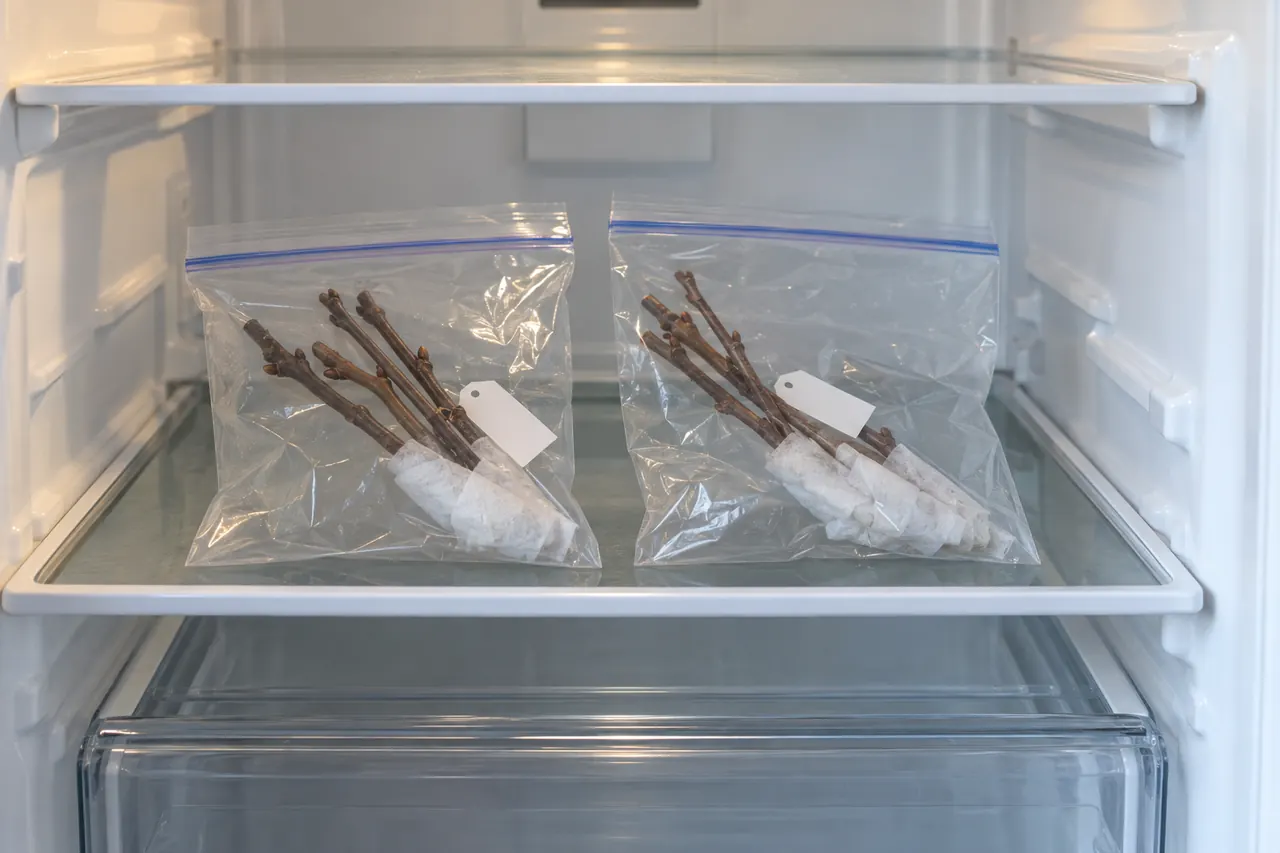
Can scionwood share a refrigerator with apples?
Penn State warns against storing scions with apples or other ethylene-producing crops because dormant buds can be injured. Another shelf or a sealed scion bag should not be treated as an ethylene-proof solution.
Does every species need a damp paper towel?
No. For example, Oregon State’s hazelnut protocol describes tightly bagged dormant scions without added moist towelling. That exception is a reason to follow the crop-specific packing method, not to switch an apple-storage recipe partway through.
Mold, condensation or opening buds: what should you do?
These are conservative handling checks, not a diagnosis or a tested rescue treatment. Keep suspect material separate while assessing it; do not assume washing or a chemical dip makes it disease-free.
| What you observe | What to check next | What not to promise |
|---|---|---|
| Droplets or pooled water | Check packing wetness and temperature swings. Correct excess moisture without leaving the wood exposed to dry. | Extra water is not insurance against drying. |
| Visible surface growth, odor or soft tissue | Separate the affected bag. Ask the supplier or local extension service about valuable material; favor sound replacement wood if condition is doubtful. | A wipe, bleach dip or fungicide is not a universal salvage procedure. |
| Wrinkling or obvious drying | Check bag closure, packing and starting condition. Compare with a fresh, identified sample. | Soaking cannot be assumed to restore a severely dried scion. |
| Buds swelling or opening | Recheck temperature and plan promptly with an appropriate rootstock and grafting method. | Returning it to the fridge does not reset its growth stage. |
| A freezing event | Record temperature and duration, isolate the batch and get crop-specific advice before using scarce rootstock. | Green tissue alone is not proof that every bud escaped injury. |
The storage-risk checker organizes these risk factors. It cannot examine the wood or calculate its remaining viability.
How long can you keep scion wood in a refrigerator?
Plan collection and storage around your intended grafting season. Species, dormancy, starting condition, moisture and temperature stability all affect the outcome. A bag that has reached a certain age is neither automatically dead nor guaranteed good.
Record a baseline photograph when packing and compare later observations against it. Check again after a power interruption, temperature excursion or visible change. Before grafting, confirm identity and condition and read the dormant apple bench-grafting example. Storage instructions are not the same as instructions for holding newly joined grafts.
Free checklist and optional monitoring equipment
Print cultivar labels, a storage checklist and an aftercare log. A paper record and an actual temperature reading are more useful than relying on memory.