
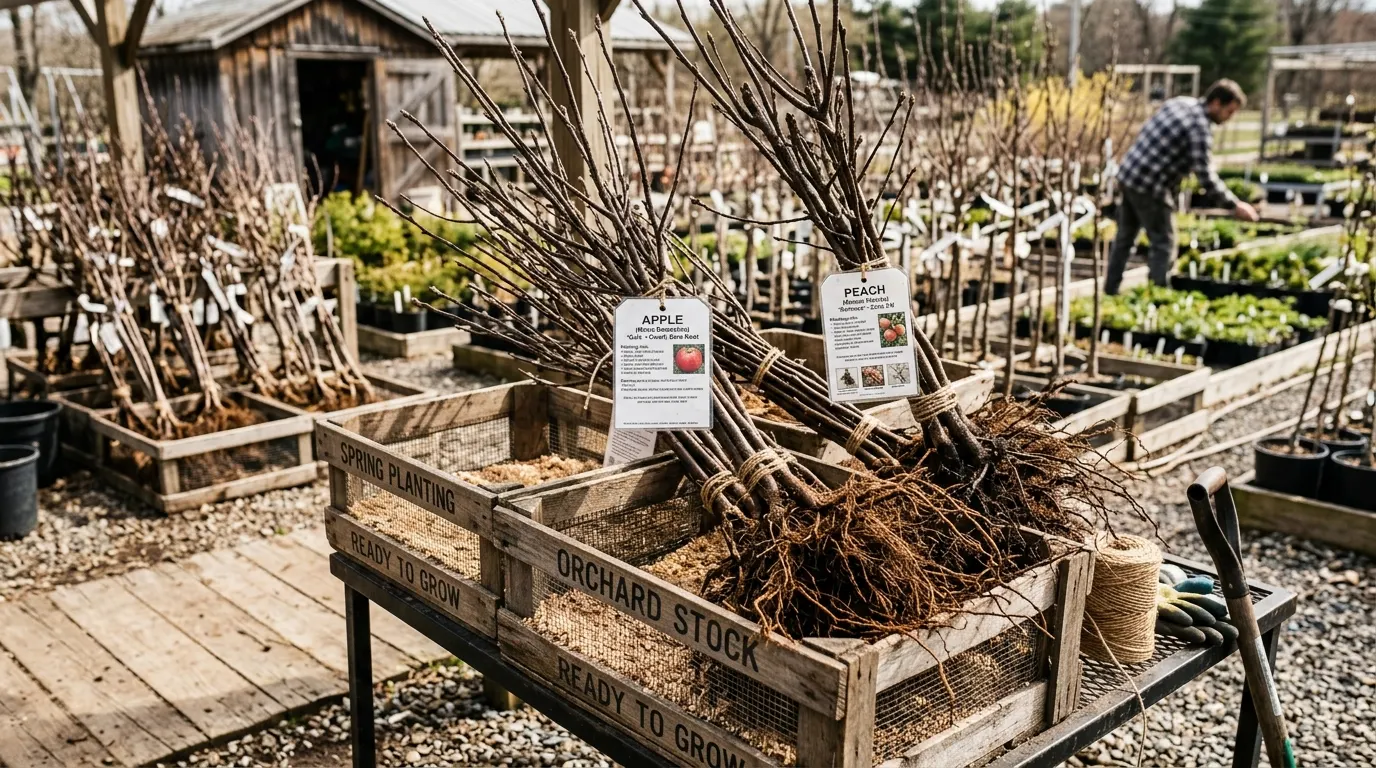
Buy the named cultivar on the named rootstock, with shipping and arrival terms you have checked for your location. A popular nursery name, “dwarf” label or attractive photograph is not enough to identify the tree you will receive.
This is a buying checklist with merchant catalog references, not a tested ranking or a promise of current stock. We do not currently earn a tracked commission from the nursery catalog links on this page.

Online nursery comparison: questions that matter
| Question | Useful answer | Warning sign |
|---|---|---|
| What exactly is being sold? | A named cultivar, rootstock and plant format, with quantity and size stated. | Only “dwarf fruit tree,” or rootstock and finished tree used interchangeably. |
| Is it suitable for my location? | Shipping eligibility and locally relevant growing information. | A hardiness-zone label used as proof of pollination, chill suitability or disease resistance. |
| When and how will it arrive? | Current dispatch window, packing format and immediate handling instructions. | Assuming a container-tree arrival policy also applies to a dormant bare-root order. |
| What happens if there is a problem? | Written arrival-reporting deadline, documentation requirements and replacement or refund terms. | Relying on an old review’s summary of a warranty. |
| Can the plant identity be traced? | Labels and invoice identify the cultivar and stock received. | The supplier cannot confirm the rootstock batch. |
Catalogs to investigate
Compare current listings at Stark Bro’s, FastGrowingTrees and Nature Hills. These links go to general catalogs; they do not establish that any of these merchants currently offers G.41, G.890 or another exact clone. Ask before purchasing.
Nursery availability and policies change with season, destination and product. Read the actual listing and checkout terms when you order. We have removed broad “exact clonal rootstocks” and fixed-commission claims that were not verified for each product.
Plan the site before the shipping date
Compare the complete order, not just the tree price
Make one line per nursery with the named cultivar/rootstock, tree price, shipping, tax, required support and arrival window. An apparently cheaper tree may not be the same product.
Made-up cost example: Nursery A lists two trees at 35 each plus 20 shipping: 90 before tax. Nursery B lists two at 42 each with shipping included: 84 before tax. B is cheaper for this basket, but only compare value after checking plant identity, size, condition and terms. These are arithmetic examples, not current nursery prices.
Check drainage, irrigation access, growing system, support and mature canopy space. Use the rootstock screen to identify questions, then the plot calculator to allow for rows, side buffers and headlands.
For apples, use the pollination checker and verify local flowering overlap. For chill-sensitive deciduous crops, compare a cultivar requirement with the same model and a relevant local weather record. A number copied from an unrelated climate is not a reliable selection method.
When the tree arrives
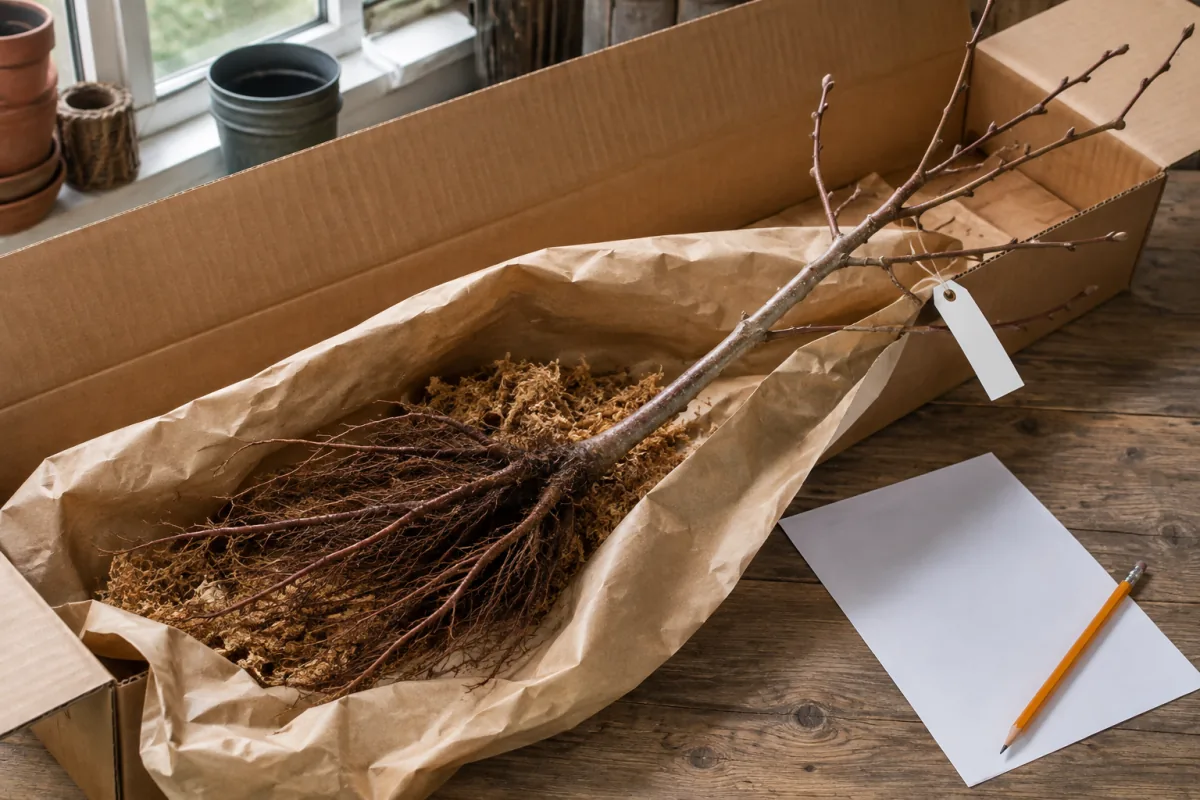
Check the package promptly and document its condition within the supplier’s reporting window. Match labels to the invoice. Follow the nursery’s handling and planting guidance while protecting roots from drying and avoiding frozen or waterlogged planting conditions.
If planting must be delayed, obtain storage or temporary-holding instructions suitable for that plant and your actual conditions. Do not invent a prolonged soaking schedule or leave roots exposed while deciding what to do. Keep the graft union at the position specified by regional and nursery guidance.
A message you can send before ordering
Rootstock, scionwood or finished tree?
- Bare rootstock: the lower plant intended to receive a graft; it is not automatically the fruit variety you want.
- Scionwood: the selected variety’s shoot material for grafting, not a rooted ready-to-plant tree.
- Finished grafted tree: the fruit cultivar already joined to a rootstock. Ask for both names.
Put the product type in your inquiry so the seller can confirm you are comparing like with like.
I am considering this cultivar for my site. Please confirm the exact rootstock and plant format, recommended mature spacing and support, current dispatch window, shipping eligibility, arrival-care instructions and the documentation needed if the plant arrives damaged.
Print an identification label and keep the invoice with your planting records. Traceable material is more useful than a generic “best nursery” badge.